
Ask five different people how long to rest a steak and you’ll get five different answers, most of them vague, “a few minutes,” “it depends.” The honest version is that it does depend, but not by much, and not for the reason most people think.
Why resting matters
Cook a steak hard enough to get a good crust and the outer layer of muscle fibres tightens up under that heat, pushing moisture toward the middle. Cut into it straight off the pan and that moisture has nowhere to go but out, onto the board, not into your mouth. Give it a few minutes and the fibres relax back out, the moisture redistributes through the whole steak instead of pooling in the centre, and what ends up on the plate stays on the plate.
There’s also some carryover cooking happening while resting steak, the internal temperature keeps climbing a couple of degrees after it’s off the heat. Worth knowing if you’re pulling a steak based on a thermometer reading rather than guesswork.
The “sealing in juices” myth
Searing doesn’t seal anything in. That idea’s been around forever and it’s just not how meat works, a hard sear builds a crust through browning, which is flavour and texture, not a waterproof layer keeping moisture inside. If searing actually sealed a steak, resting wouldn’t change how much juice ends up on the board when you cut it, and it very obviously does.
What resting actually does is let the fibres relax and the moisture even back out. That’s the real mechanism. Nothing about sealing, nothing mystical about it.
Steak resting time by thickness
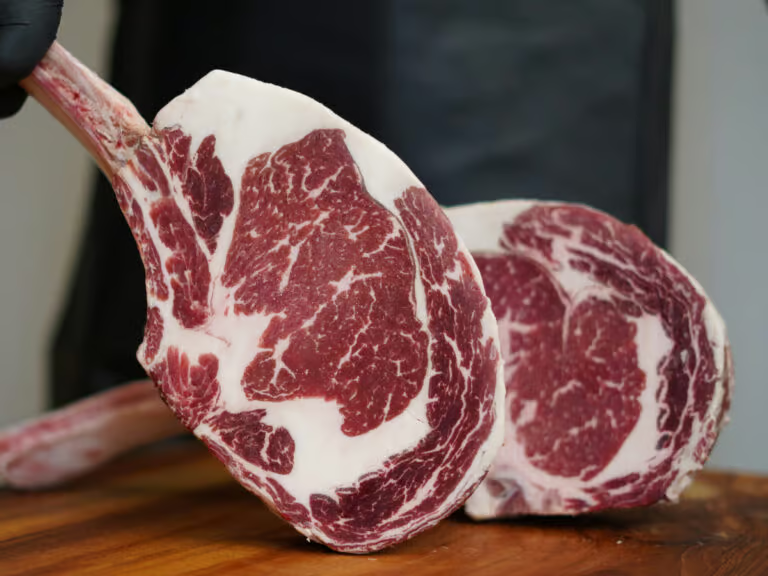
A thin cut, skirt, a 2cm minute steak, barely needs anything. Two or three minutes and it’s done relaxing; there isn’t much moisture movement to wait for in something that thin. A standard steak, 2.5 to 3.5cm, wants somewhere around five to eight minutes. Anything thick and bone-in, a ribeye, the Portoro, benefits from closer to ten.
That number moves depending on how the steak was cooked, too. A reverse-seared steak has already spent most of its cooking time coming up to temperature gently in the oven, so it hasn’t built up the same internal pressure a hard sear from raw does, five minutes is usually plenty even on a thick cut. We’ve gone into that in more detail in How to Reverse Sear a Steak, if that’s how you’re cooking.
How to rest without losing the heat
Tent it loosely with foil rather than wrapping it tight. Tight foil traps steam against the crust and softens everything you just spent a couple of minutes building in the pan. Rest it on a warm plate if you can, not a cold stone board straight from the fridge, marble looks the part but pulls heat out of a steak faster than almost anything else you’d rest it on. If the oven’s just been on, the residual warmth nearby is usually enough. Nothing elaborate needed.
What happens if you skip it
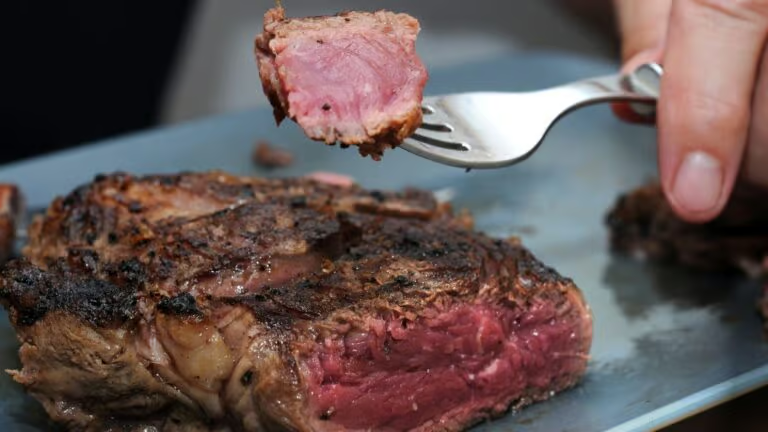
Cut into a steak straight off the grill and you’ll see it immediately, a rush of juice across the board, and the steak looks slightly greyer and tighter a minute later than it should. It’s not ruined. But some of what should’ve stayed in the steak is sitting on the chopping board instead, and the texture’s noticeably tighter than a steak that’s had its few minutes.
If you’re cooking a thicker cut tonight, build the rest into your timing rather than treating it as optional, it’s the easiest few minutes in the whole process to get right.
Macelleria Bondi · G09/180 Campbell Parade, Bondi Beach · Open 7 days · No bookings required
FAQs
How long should you rest a steak before cutting? Two to three minutes for a thin cut, five to eight for a standard steak, up to ten for something thick and bone-in, less than that if it’s been reverse seared rather than pan-seared from raw.
Does resting a steak keep it warm? Not hot, but it shouldn’t go cold either if it’s tented loosely somewhere warm. Expect it to have cooled a bit from straight-off-the-pan temperature by the time you cut it, that’s normal, not a sign it’s rested too long.
Should you cover a steak while it rests? Loosely, yes. A foil tent keeps some heat in without trapping steam against the crust. Wrapping it up tight like a parcel undoes the work of getting a good sear in the first place.
Does a thicker steak need more resting time? Generally, yes, more mass means more moisture movement to settle. But how it was cooked matters as much as thickness. A thick steak that’s been reverse seared needs noticeably less resting time than one seared hard from raw.