About a Reverse Sear…
The reverse sear method gives you more control over doneness than pretty much anything else out there. Here’s how it works, and which cuts from our Butcher’s Counter suit it best.
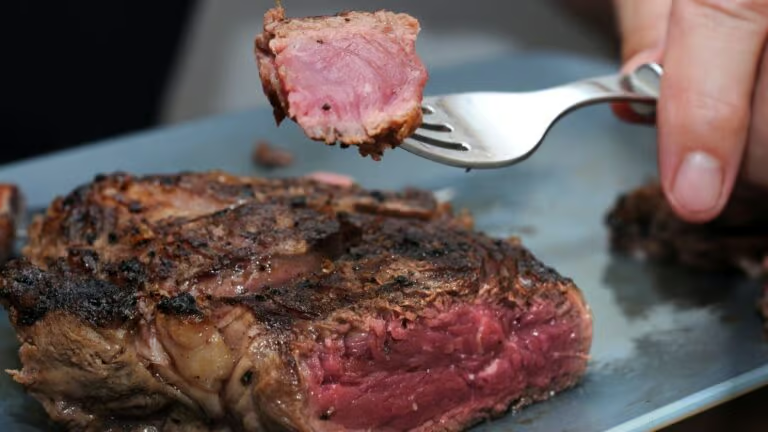
Most people cook a steak the same way: hot pan first, then hope for the best. The reverse sear steak method flips that order – gentle heat first, blistering heat right at the end – and it’s the reason a thick steak can come out evenly pink from edge to edge instead of grey on the outside and cold in the middle.
It’s also the method we’d point you to if you’ve just carried a thick cut home from Macelleria Bondi Beach and don’t want to guess your way through it.
What the reverse sear is and why it works
A hot pan cooks from the outside in. Drop a 4cm steak into ripping heat and the outer centimetre overcooks long before the centre’s caught up – that’s the grey band you see when you cut into it.
Reverse searing splits the job in two. You bring the steak up to temperature slowly in a low oven, cooking it gently and evenly all the way through, then finish it in a screaming hot pan purely to build crust. One does the doneness, the other does the colour – and trying to make a single hot pan do both jobs at once is really where things go wrong.
There’s a second benefit too. Slow, dry heat draws surface moisture off the steak as it cooks, and a dry surface browns faster and better than a wet one does. You end up with a deeper crust in less time, which in turn means less heat driving inward and overcooking the meat you just carefully brought up to temperature.
Which cuts suit it
Thickness is really the whole game here. The reverse sear method needs at least 4cm to make sense, and it rewards more than that if you’ve got it.
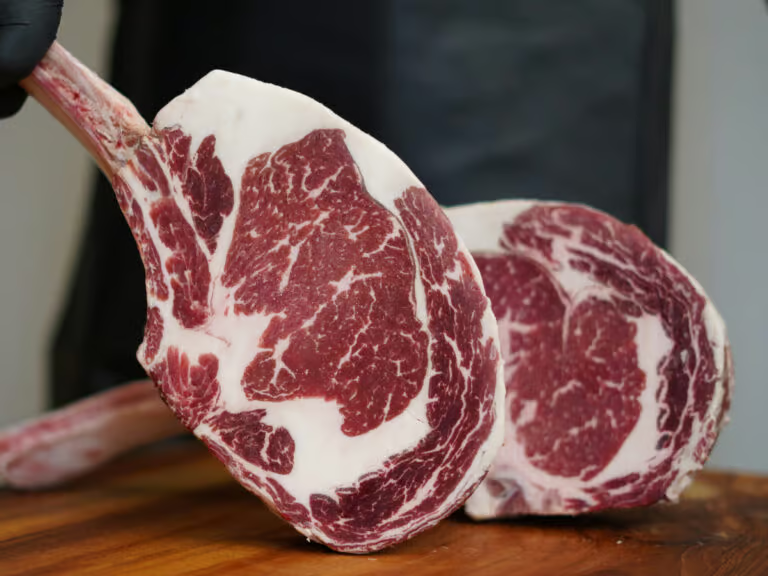
Looking for dry-aged steak in Bondi? At Macelleria Bondi’s Butcher’s Counter, that’s our dry-aged Delmonico, thick-cut rib-eye and heavy scotch fillets, cut thick specifically because they cook better that way.
What it doesn’t suit is anything thin. A 2cm minute steak or a flat skirt will be cooked through before the oven’s done anything useful, and you’ll lose the crust into the bargain too. Those cuts want one thing only: maximum heat, minimum time.
Reverse searing a thick steak also happens to be the most forgiving way to handle an expensive one. The slow phase gives you a wide window to check on it, and nothing dramatic happens in the space of thirty seconds either way.
Oven temperature and target internal temp
Set the oven to 110–120°C. Season the steak generously with salt, sit it on a rack over a tray so air can move underneath it, and put it in.
Then use a thermometer. This is the one piece of equipment that actually makes the method work, and there’s no real substitute for it.
Pull the steak out roughly 10°C below your final target, since the sear will carry it the rest of the way. As a rough guide – these numbers move around a bit depending on your steak and your oven, so treat them as a starting point rather than gospel:
- Rare – pull at 42°C, finish around 50°C
- Medium rare – pull at 46–48°C, finish around 54–56°C
- Medium – pull at 52°C, finish around 60°C
- Medium well – pull at 58°C, finish around 65°C
On a 4cm steak that’s roughly 25–40 minutes, but time is only ever a rough guide. Thickness, starting temperature and your particular oven all shift that number around. The thermometer’s the only one that doesn’t lie.
The sear: cast iron, 60 seconds each side
While the steak rests off the heat, get a cast iron pan as hot as you can manage. Cast iron matters here specifically – it holds enough thermal mass that the steak doesn’t cool the surface on contact, which is exactly the problem you run into with a lighter pan.
Pat the steak dry. Add a high-smoke-point oil, lay the steak in, and leave it alone for 60 seconds. Flip, another 60 seconds on the second side. If your steak’s got a fat cap, stand it on its edge for another 30 seconds to render and crisp it up.
Butter, garlic and thyme in the last 30 seconds never hurt either, if you’ve got them handy.
Resting and serving
Here’s the part most people don’t expect: a reverse-seared steak barely needs resting at all. Because the interior came up to temperature slowly and evenly, there’s no steep gradient pushing juices toward the centre the way there is with a straight sear. Five minutes is plenty – enough for the crust to set without the steak going cold.
Slice against the grain, finish with flaky salt, and serve.
Ask our butchers to name the best steak cooking method for a thick cut and this is what they’ll give you, more often than not – it’s what we’d point you to if you asked how to cook it at home too.
The counter is open 7 days. Our butchers will cut to thickness and talk you through temps before you leave.
FAQ's
What is the reverse sear method for steak?
Reverse searing means cooking a steak slowly in a low oven first, then finishing it in a very hot pan. It reverses the usual order – sear last, not first – which lets you control doneness precisely and still get a proper crust.
What temperature do you reverse sear a steak?
Use a low oven of 110–120°C for the slow phase, and pull the steak about 10°C below your final target internal temperature – around 46–48°C for medium rare. Then sear in a cast iron pan on the highest heat you have, 60 seconds per side.
Is reverse sear better than regular searing?
For thick steaks, generally yes – more even doneness, a better crust, far less risk of overcooking. For thin steaks it’s actually worse than a straight sear, because the steak cooks through before you’ve had any chance to build a crust at all.
Can you reverse sear a thin steak?
Not really, no. The method needs at least 4cm of thickness to work properly. Anything thinner will overcook during the oven phase, so cook thin steaks fast and hot in a single pass instead.
Macelleria Bondi · G09/180 Campbell Parade, Bondi Beach · Open 7 days · No bookings required.