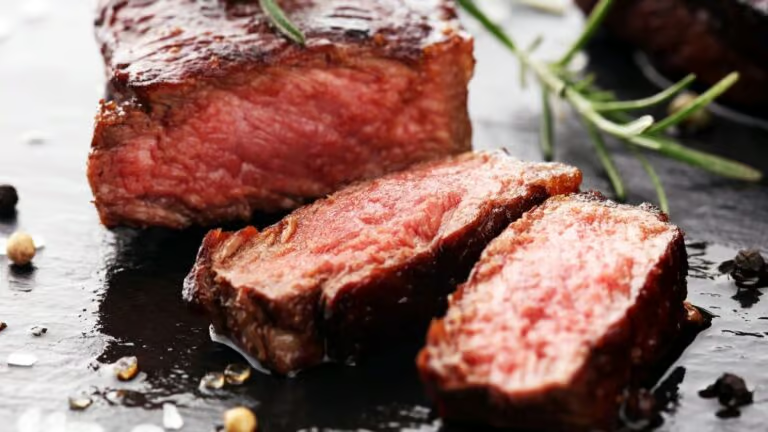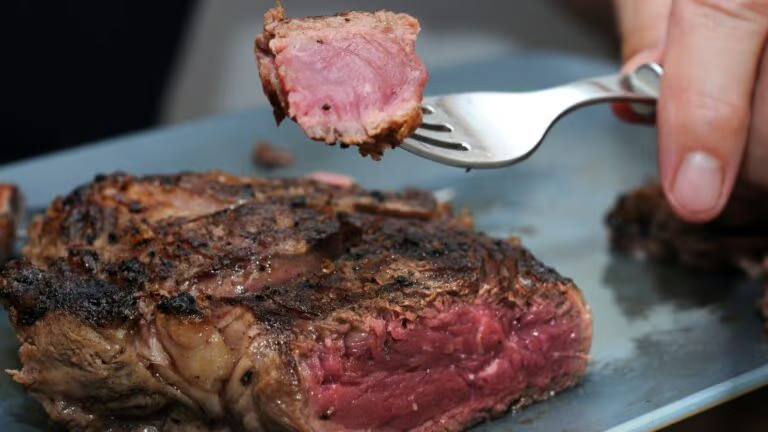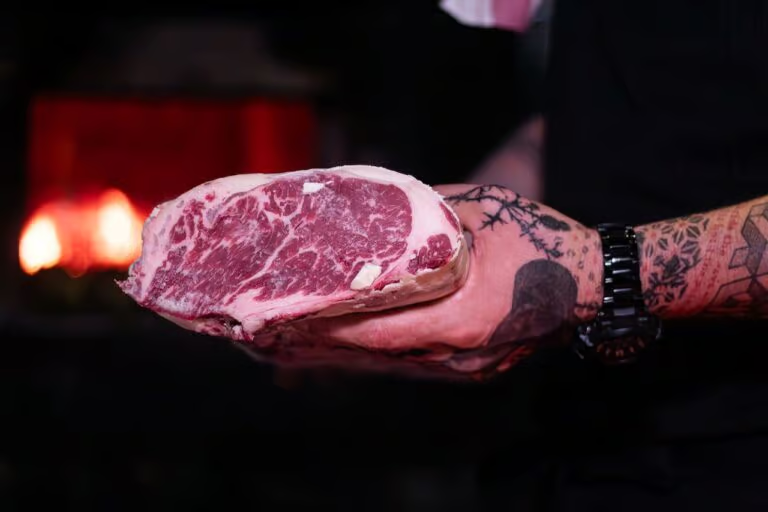

It’s the question we get asked across the Butcher’s Counter more than almost any other: how much protein is actually in a steak? People training at the beach, people managing their weight, people just trying to eat a bit better – they all want the number.
The real numbers, and what they mean for your diet
First, the thing that trips almost everyone up: raw and cooked figures aren’t the same. A steak loses somewhere around 20–30% of its weight in water on the grill, and that concentrates everything left behind. So 100g of raw beef and 100g of cooked beef give you noticeably different protein numbers, even though it’s the same piece of meat.
The figures below are approximate – they’ll shift a bit with trim, grade and how hard you cook it – but they’re the right ballpark to work from.
Protein per 100g by cut
| Cut | Protein (raw) | Protein (cooked) | Fat (cooked) |
| Eye fillet | \~22g | \~29–31g | \~8g |
| Rump | \~21–22g | \~30–31g | \~9–11g |
| Scotch fillet | \~19–20g | \~24–26g | \~15–18g |
| Wagyu (high marble score) | \~15–17g | \~20–23g | \~30–40g |
The pattern here is fairly simple once you see it: protein and fat are competing for the same space. The leaner the cut, the more protein you get per 100g, because there’s less marbling taking up room. Eye fillet and rump sit at the top for that reason. Both are available as grass-fed cuts at Macelleria Bondi Beach. Scotch fillet trades away some protein density for the marbling that gives it its flavour. Wagyu goes furthest down that road of all.
That doesn’t make one cut better than another, really – they’re just built for different jobs on the plate.
How steak compares to chicken and fish
Red meat holds its own against most of what people reach for instead, protein-wise. Per 100g cooked, roughly:
- Chicken breast (skinless): ~31g
- Rump steak: ~30–31g
- Tuna: ~29g
- Eye fillet: ~29–31g
- Barramundi: ~26g
- Salmon: ~25g
- Scotch fillet: ~24–26g
A lean steak is basically level with chicken breast. Where beef gets ahead is what else it brings along – heme iron in the form your body absorbs most easily, zinc, and B12 in amounts chicken and most fish just don’t match. Fish, for what it’s worth, wins on omega-3s. Both things can be true.
The fat and protein trade-off: wagyu vs leaner beef
Wagyu is where this trade-off shows up most starkly. At a high marble score you’re looking at something like 20–23g of protein per 100g cooked, against 30–40g of fat – compare that to roughly 30g of protein and 9g of fat in a rump. Same weight of meat, very different plate, and wagyu can run two to three times the calories.
Worth knowing, though: a large share of wagyu’s fat is monounsaturated, and oleic acid – the same fat that makes up most of olive oil – is a big part of that. It’s a genuine point in its favour, even if it’s not the reason most people order it.
But if protein per gram is the goal, wagyu isn’t the efficient way to get there. Our view at our Butcher’s Counter in Bondi Beach has always been fairly simple: wagyu’s an occasion steak, so eat it for what it is.. If you’re eating specifically for protein, reach for rump or eye fillet instead.
Practical serving size guide
Translating this into what actually lands on your plate:
- 200g cooked steak – roughly 60g protein from eye fillet or rump, closer to 50g from scotch fillet
- 300g raw steak (a standard counter cut, about 220g once cooked) – roughly 65g protein from a lean cut
- A 400g dry-aged Delmonico from our Bondi Beach menu, shared or not, sits comfortably above 80g cooked protein
For most adults, a single steak covers a good share of a day’s protein in one sitting. Requirements vary a fair bit by body size and activity level though, so treat these more as reference points than a target – and it’s worth talking to a dietitian if you’re building a serious training or weight-management plan around them.
Ask our butchers at the counter and they’ll tell you roughly what they tell each other: buy the cut that suits the meal. Lean and protein-heavy for a weeknight after a session at the beach. Marbled and rich when it’s Saturday and the point is just pleasure.
FAQ's
How much protein is in a 200g steak?
A 200g cooked steak gives you roughly 60g of protein if it’s a lean cut like eye fillet or rump, and around 50g from a scotch fillet. Weighed raw, a 200g steak comes in closer to 42–44g, since cooking removes water and concentrates the protein.
Which steak cut has the most protein?
Lean cuts win out. Rump and eye fillet both sit around 29–31g of protein per 100g cooked, because they carry less intramuscular fat competing for the same weight. Scotch fillet comes in lower at 24–26g, and heavily marbled wagyu lower again at roughly 20–23g.
Is steak a complete protein?
Yes. Beef contains all nine essential amino acids in the proportions the body needs, including a decent hit of leucine, the amino acid most tied to muscle protein synthesis. It also delivers highly absorbable heme iron, zinc and vitamin B12 along the way.
How does wagyu compare to regular beef for protein?
Wagyu has less protein per 100g than leaner beef – roughly 20–23g cooked versus around 30g for rump – mostly because heavy marbling displaces lean muscle. It carries a lot more fat and significantly more calories, though a decent proportion of that fat is monounsaturated. For protein density specifically, leaner cuts remain the better choice.
Macelleria Bondi · G09/180 Campbell Parade, Bondi Beach · Open 7 days · No bookings required.