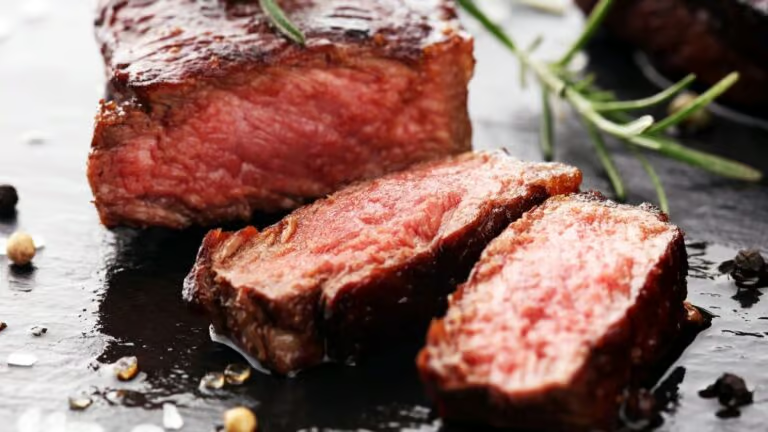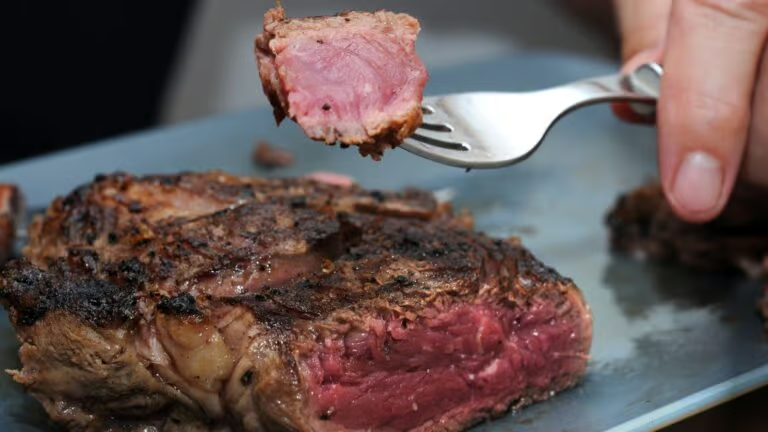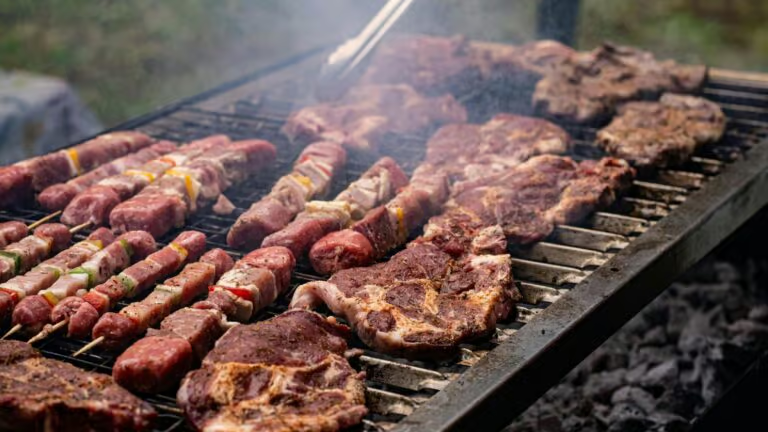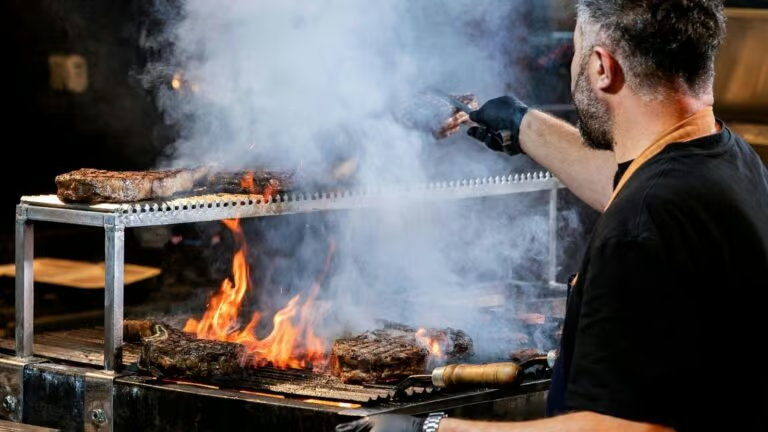

Every home cook ends up asking some version of the same question: BBQ or pan? There’s no single best steak cooking method that wins in every situation, it comes down to the cut, how thick it is, and what kind of night you’re having. If we had to run our whole kitchen on one of the two, it’d be cast iron. But that’s a professional answer built around consistency during service, not necessarily the best way to cook steak at home on a Saturday with people standing around it.
BBQ: charcoal vs gas
Charcoal gets hotter, and it gets you real smoke, that’s the honest reason people prefer it. It also takes longer to get going and holds heat less evenly than gas, especially twenty minutes into cooking for six people once the coals have started dying back on one side. Gas lights faster, holds a set temperature more reliably, and for most home setups it’s the more practical choice. You just don’t get the same depth of flavour out of it.
Either way, a BBQ’s strength is the open flame and the grate. Fat drips and flares, which caramelises the surface in a way a flat pan can’t quite replicate, and it’s genuinely the better method for anything carrying a decent fat cap, a rump, a scotch fillet, sausages, skewers. Lean cuts are less forgiving over live fire, because there’s no way to see or control exactly what’s happening underneath once it’s down. An eye fillet left thirty seconds too long over hot coals is thirty seconds you don’t get back.
Cast iron: why kitchens use it
If you don’t have a BBQ, or can’t be bothered firing one up for one or two steaks, cast iron gets you most of the way to the same result indoors, sometimes further. A pan makes contact with the entire surface of the steak, not just the ridges of a grill plate, so the crust builds evenly across the whole cut rather than in stripes. It holds heat steadily, doesn’t flare, and gives you full control over exactly how long each side is down.
That consistency is really why professional kitchens lean on it. Every steak that goes out needs to come off looking and cooking the same way an hour into service as it did at the first table, and a pan gives you that in a way an open flame, with wind, flare-ups and hot spots, doesn’t. It’s part of what “the butcher who cooks for you” actually means in practice: we’re not just handing over a cut and hoping for the best, we’re cooking it the way we’d cook it ourselves, with the same pan, every time.
Combining both: the reverse sear
For anything thick, 4cm and up, a bone-in ribeye or a thick-cut rump, the best result usually comes from using both. Bring the steak up to temperature slowly first, then finish it hard and fast for the crust. That’s normally done with an oven and a cast iron pan, but you can do the whole thing on a BBQ instead, using a two-zone setup: indirect heat on one side to bring the steak up gently, then straight over the coals or the hottest burner for the last minute to finish it. We’ve covered the full method, temperatures and timing separately in How to Reverse Sear a Steak if you want to go deeper.
Cut-to-method guide
| Cut | Best method | Why |
|---|---|---|
| Rump, scotch fillet | BBQ or cast iron | Enough fat to render well either way, forgiving over an open flame |
| Eye fillet | Cast iron | Lean and easy to overcook without close control |
| Bone-in Ribeye, Portoro | Reverse sear (either method) | Thick enough to need a slow, even cook before the sear |
| Wagyu striploin, rump cap | Cast iron | High fat content flares badly over coals, easier to manage in a pan |
| Skewers, sausages | BBQ | Built for direct heat and a bit of char |
This isn’t a fixed rulebook, it’s just where we’d point you if you asked at the counter.
None of this means picking a side permanently. Most people who cook a lot of steak end up using both, depending on the night, BBQ when there’s a crowd and the weather’s on your side, cast iron when you want more control, or when there’s no BBQ in the picture at all, which plenty of Bondi apartments don’t have room for.
If you’re not sure which way to go for what’s in your fridge, ask us next time you’re at the counter, we’re cooking the same cuts most nights anyway.
Macelleria Bondi · G09/180 Campbell Parade, Bondi Beach · Open 7 days · No bookings required
FAQs
Is cast iron or BBQ better for steak? There isn’t one best steak cooking method for every situation, it depends on the cut and what you’re going for. For a thick, well-marbled cut with people over, BBQ wins on flavour and atmosphere. For precision, a lean cut, or when you don’t have a BBQ, cast iron gets you a more even result.
What is the reverse sear method? Cooking a steak slowly first, then finishing it hard and fast in a hot pan or over direct heat for the crust. It suits thick cuts particularly well, we’ve covered the full method, temperatures and timing in a separate guide.
Can you cook wagyu on a BBQ? You can, but the high fat content means more flare-ups than a leaner cut, so it needs closer attention and usually a bit less time than you’d expect. A pan gives you more control over how much of that fat renders out before it catches on an open flame.
Why do steakhouses use cast iron pans? Consistency. A pan gives the same result steak after steak through a service, without wind, flare-ups or an uneven grill affecting the outcome, which matters more when you’re cooking dozens of steaks a night than it does cooking one at home.